Essay · Glaze fit ·
Why glazes craze, and why a perfect fit is the wrong goal
Crazing, shivering, and the quiet compression a good glaze lives under: what the cracks are telling you, and why a perfect fit is the wrong goal.
A glaze is glass. Not glass-like, not a cousin of glass: the coating on a mug and the pane in a window are the same kind of material: glass, which set before its atoms could sort themselves into crystals. The only real difference is the job. Window glass is asked to be flat and clear. A glaze is asked to do something harder. It has to stay put on a vertical wall while it is molten, then bond permanently to the clay underneath as the kiln cools, and it has to do that bonding while both materials are shrinking at rates that never quite agree.
That last part is the whole story of glaze fit, and it is where crazing comes from.
The two materials never contract in step
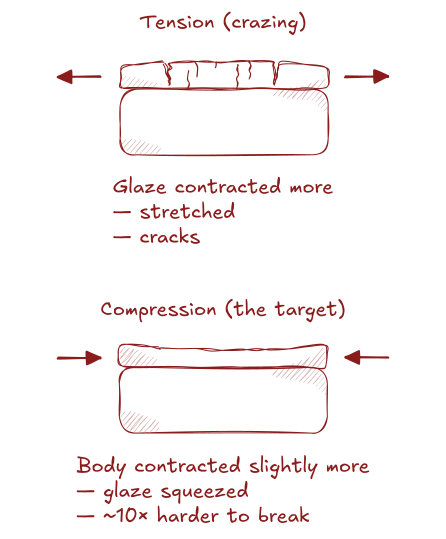
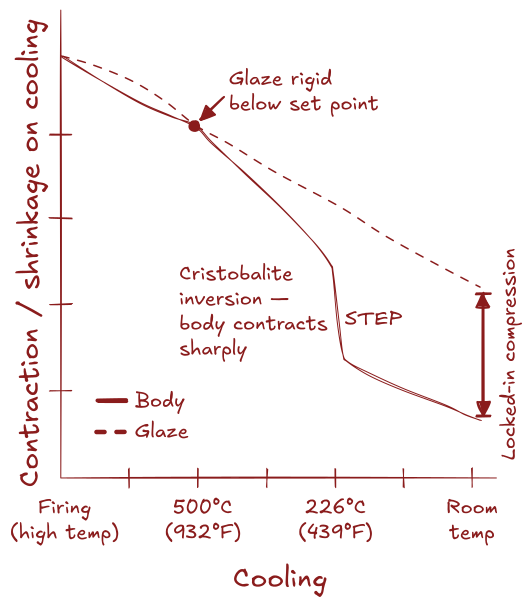
When a pot cools, the body shrinks and the glaze shrinks, but each follows its own rate. Above a certain temperature the disagreement does not matter, because the glaze is still soft enough to flow and simply goes along with whatever the body does. Below the point where the glaze turns rigid, at around 500 °C for most glazes, it can no longer move. From there down to room temperature, every degree of cooling stores the difference between the two rates as permanent mechanical stress in the wall of the pot.
Which way that stress points depends on which material shrank more. If the glaze contracts more than the body, the glaze ends up too small for the surface it covers, and it is stretched. If the body contracts more, it squeezes the glaze, and the glaze is held in compression. Those two conditions are the two sides of fit, and each has a name every potter already knows.
Crazing is a seam that split
Glass is weak in tension. Stretch its surface and a crack opens. A glaze stretched over a pot that shrank less than it did is a glaze in tension, and the result is crazing: that fine web of cracks you have watched spread across a surface that looked perfect coming out of the kiln.
Daniel Rhodes had the image for it. A crazed glaze, he wrote, “is too small for the area over which it is stretched, and it therefore breaks like a splitting seam in a too-small pair of trousers.” The first cracks to open are long ones; smaller cracks fill in afterwards, dividing the surface into a mesh of little squares and triangles.
It is tempting to file crazing under cosmetics, but the cracks are structural. They propagate down into the clay and leave a glazed pot more fragile than a bare one would have been. On functional ware they collect bacteria and stains in lines you cannot scrub. And they do not always show up when the pot is warm from the kiln. Some glazes craze weeks or months later, which is a clue worth holding onto.
Shivering is the dangerous opposite
Push the fit the other way, so the body contracts much more than the glaze, and the squeeze stops being helpful. The glaze gets ejected from the surface in flakes and slivers, sometimes lifting a thin skin of clay with them. This is shivering, and it is the fault to be genuinely afraid of. The flakes are sharp, they are close to invisible against the rim of a cup, and they can end up in someone’s mouth. A pot that shivers is a pot to remake, not to use.
So fit is bracketed by two failures: too much stretch on one side, too much squeeze on the other. The interesting question is where you are supposed to aim between them.
The target is not a perfect match
The intuitive answer is that you want the glaze and body to contract at exactly the same rate, so neither is stretched nor squeezed. That answer is wrong, and understanding why is the thing that reorganises how you think about glaze.
Glass survives a squeeze roughly ten times better than a stretch. So you do not aim for zero stress. You aim, deliberately, for slight compression: a glaze the body is gently squeezing, so that any force trying to crack the surface has to overcome that squeeze before it can begin to stretch the glass at all. It is the same trick as tempered glass, and it makes a well-fitted pot measurably stronger than an unglazed one. A perfect stress-free match is not even a useful goal, because ordinary changes in room temperature are enough to tip a zero-stress glaze into tension after it leaves your studio.
Why the pot crazes weeks later
Hold the two curves in your head: the body and the glaze, each shrinking as the kiln cools, tracing two lines that drift apart. In earthenware, one moment on that descent decides everything.
As an earthenware body cools through 226 °C, a silica phase called cristobalite inverts and the body contracts in a sudden step, a drop the already-rigid glaze cannot follow. That step is what loads the glaze into the compression you want. But earthenware is porous, and over months it drinks atmospheric moisture and swells very slightly while the glaze does not. If the pot had been fired to a perfect zero-stress fit, that slow swelling alone would be enough to stretch the glaze into tension and craze it. Because the cristobalite step banked some compression up front, the swelling first has to spend that compression before it can start stretching anything. Enough initial squeeze buys the pot years. Too little, and the crazing arrives late, often after the pot has changed hands.
The one lever, and where this goes next
If a glaze is crazing, it is contracting too much, and the fix is to lower its contraction. The single most useful fact for doing that is this: silica expands less than one-eightieth as much as soda does. Adding a little silica dilutes the high-expansion fluxes and pulls the whole recipe’s contraction down, which is why a modest increase, sometimes as little as five per cent of the recipe, is enough to stop a borderline glaze from crazing.
That is one lever of five, and silica is only the first entry in a table of oxides ranked by how much they expand. Correcting crazing in practice means working down an ordered list of substitutions, correcting shivering means running the same logic in reverse through a narrower safe band, and knowing which move to reach for means reading the recipe as a set of expansion figures rather than a list of ingredients. That is where the chapter turns next, and it is more than a blog post can carry.
This is an abstract of one chapter of The Form of Clay, a book I am writing on the craft and the physics behind it. The book carries the full oxide expansion table, the five-step crazing correction, the matching corrections for shivering, and the chemistry underneath all of it. It is close, but not finished. If you would like to know when it is out, ask for the letter and I will email you, or leave your address in the form below.